A Nightmare on Elm Street 2: Freddy’s Revenge; and the Monster/ Homosexual Relationship

The 1984 horror film A Nightmare on Elm Street 2: Freddy’s Revenge (ANOES2), includes themes of homosexuality and the queer to fully portray the role of Freddy Krueger. Before discussing the film and these themes it is important to summarize Harry M. Benshoff’s writings in ‘The Monster and the Homosexual’.

Benshoff begins his writings by describing homosexuality and its reception in English culture as monstrous. This can be seen through the societal treatment of homosexuals in the AIDS epidemic and generally in how they are treated. Benshoff then claims that often times the monster in horror films is metaphoric and can be equated with the homosexual.

When describing the theory of the monster Queer, Benshoff includes Richard Dyer’s points on how gayness in films is not present to express itself, but rather to express sexuality in general about society. This can be seen with the many instances with the interpretation of the monster as a product of misdirected or inappropriate sexual energy through the incest taboos, masturbation, and promiscuity included.

Benshoff lists the four different ways in which homosexuality intersects with the horror film; (1) The inclusion of identifiable gay/lesbian characters (2) The film being made by a gay/lesbian director, writer, or producer (3) The sub textual or connotative avenues in which the homosexual enters the genre (4) That any film viewed by a homosexual may be considered Queer. Benshoff denotes the third listing as the most important factor because of the way homosexuality characterizes the monster or villain.

Looking at ANOES2, homosexual elements strongly characterize Freddy Krueger and the methods and actions of his killings. In this film, Krueger possesses a teenage boy, Jesse, as a vessel for killing his selected victims. The idea of Krueger’s possession alone is queer, in that he is both metaphorically and literally inside Jesse. Krueger, being a former pedophile and murderer, combines sex and death through his killings. Benshoff discusses early film theory on monster movies claiming “the monster represented an eruption of repressed sexual desire.” With Krueger as a supernatural entity living in a dream-dimension, he is only able to act on his sexual desires through his torture and murders of people.
thefilmexperience.com: New Line Cinema

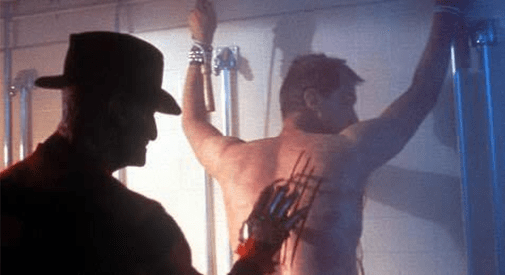
In ANOES2, the murders of Jesse’s friend Ron and gym teacher Coach Schneider have some sexual connotations involved. Coach Schneider is portrayed as a pedophile that gets off on punishing his students and is later shown approaching Jesse in a risque bar clad in leather. Schneider brings Jesse back to the school for punishment but is then murdered naked in the showers by Jesse/Krueger, shown above. As for Ron, he befriends Jesse after their mutual gym punishments forces them to talk to one another. Throughout the film, both are shown in locker-room changing and talking about girls with an intended homosexual tension. Jesse/Krueger, when spending the night in Ron’s room, murders his friend who is shirtless. Both these killings have some type of Queer attachment involved. Benshoff’s third way homosexuality enters films supports this, “homosexuality on screen has been more or less allusive: it lurks around the edges of texts and characters rather than announcing itself forthrightly.” This is precisely the method in which homosexuality enters ANOES2, through subtle clues and hints.
atthemantleclinic.com: New Line Cinema

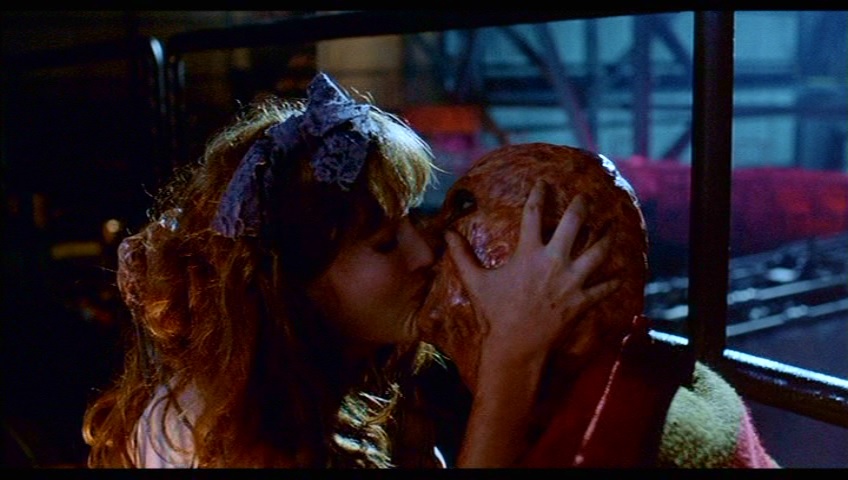
Another aspect that is Queer in ANOES2, is the love triangle between Jesse, Krueger, and Lisa (Jesse’s intended love interest), shown above. Lisa becomes a target of Krueger, but through the power of her love for Jesse, Krueger is defeated. While on the surface, this seems like a natural heterosexual relationship, it can be interpreted as Lisa’s jealousy of Krueger for possessing Jesse. Benshoff writes, “(Queer) ultimately is what opposes the binary definitions and proscriptions of a patriarchal heterosexuality.” This is shown through Krueger’s displacement in the film. Krueger ultimately is the only thing standing between Lisa and Jesse having an otherwise normal heterosexual relationship.

ANOES2 utilizes Queer elements and subtle homosexual elements to fully portray the monster of Freddy Krueger. The possession of Jesse and targeting of Ron and Coach Schneider show that Krueger has a combined lust for sex and death. Through his actions it is apparent that homosexuality is a large element in the film and character of Freddy Krueger.
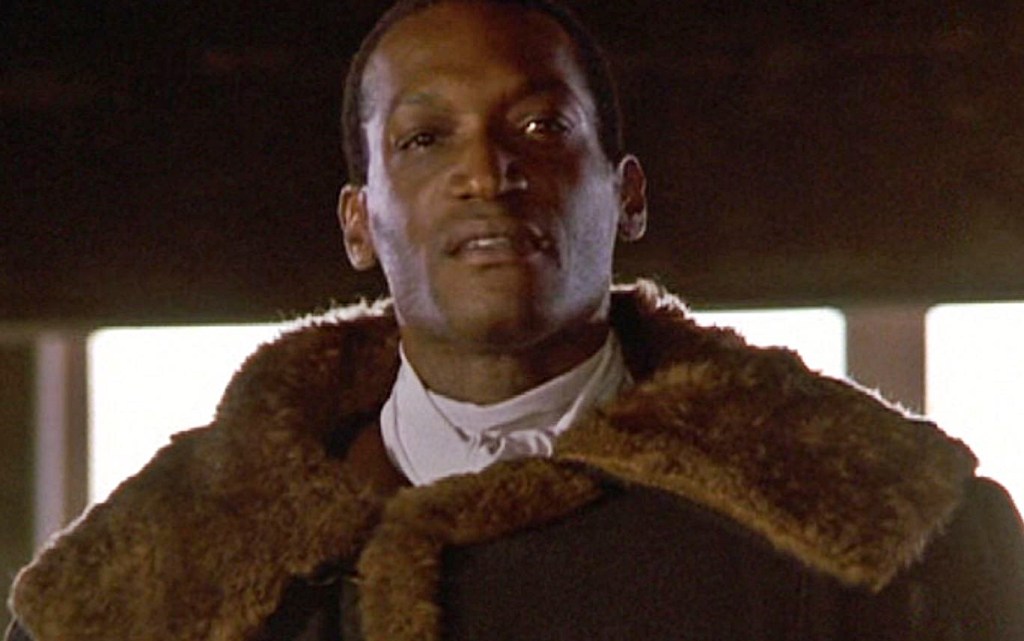
Candyman: Blackness in Horror and Robin Coleman

The 1992 psychological horror film, Candyman, is a film that uses an urban legend to project the social struggles of Blacks onto White culture and life. Before discussing the film in this context, it is important to summarize Robert R. Means Coleman’s writings in ‘Studying Blacks in Horror Films.’

Coleman opens up in his writings by calling attention to the relationship Blacks have with American cinema. This is where Coleman brings up the “black-gaze,” or the idea that blacks hope to see themselves as whole, full, and realized subjects in film and not a plot device for killing and violence. Coleman then speaks about how Blackness and horror work together in film to provide “important discursive inroads.” This in other words is the idea that violence will not overshadow the Blackness narratives offered in the films.

Coleman then discusses the differences between Blacks in horror films and Black horror films. The former, are films that feature Blackness and are not focused around it, but pander towards the mainstream audience. In these films, the link between Blackness and horror is not shown, but merely used as underdeveloped characters that are otherwise expendable. In Black horror films, the narrative is written for attention to racial identity. Typically, these films are written, directed, and acted primarily by Blacks and intended to subvert the treatment of the race when shown to White audiences. While these two types examples differ, they both go deeply into content such as race, racial identity, and racial relationships.

Coleman then goes into the idea of epistemological flow, or the ‘color line,’ which represents the distinct difference in perception of Black vs. White. Soon after, Coleman suggests that Blackness can reject and combat against evil in horror, centralizing more around goodness.

In Candyman, the first inference can very easily be that the film is a violent slasher, but a closer examination shows a more deep narrative focused around the perception of Blacks in society. The urban legend present in Candyman is quite literally representative of the Black Boogyman, which is the fuel for nightmares among many children.

When an intellectual graduate student, Helen Lyle, obsesses over the legend for her thesis, she becomes embedded in the story of the Candyman and is thoroughly haunted by him. The film looks to project the racial identity of impoverished Blacks on a well adjusted White woman through horror and violence. The intent of this by the filmmaker, Bernard Rose, is more along the lines of a Black Horror film, despite the mainstream production value and cinematography. This is supported by Coleman when he writes, “the Black horror film story is told from the vantage point of empowerment and with a goal of consciousness raising.”

hotflick.net: Universal Pictures

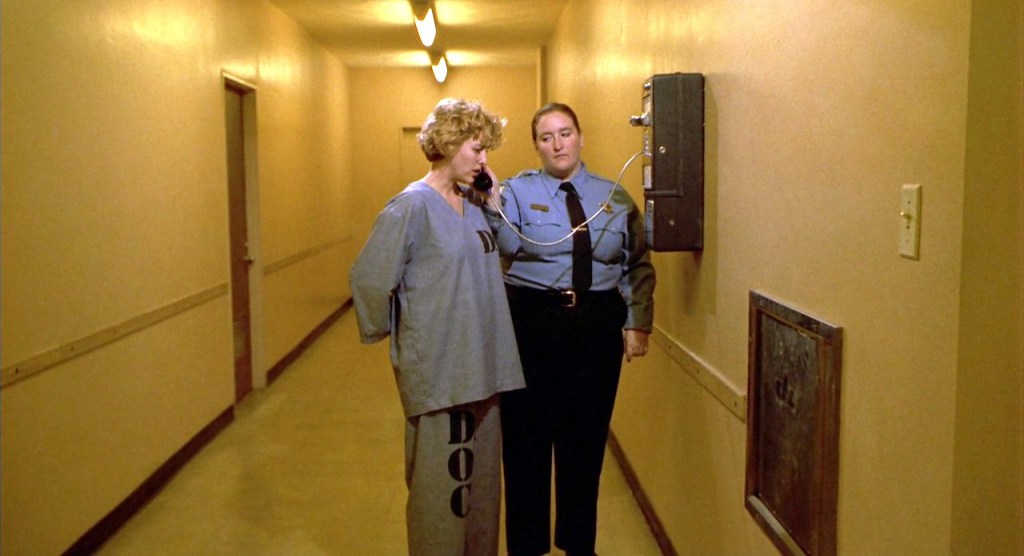
Helen is framed by the Candyman by being put in a vulnerable and guilty position around the murders of those in her life. This represents societies view of Blacks and crime, often casting guilt onto Blacks and labeling them as violent by nature. This offers a disturbing rendition, as Helen is a pretty, intelligent, and rational White woman, and shows audiences the representation of the ‘color line’. Regarding the color line, Coleman writes, “It is a problem that is still exacerbated by a ‘sense of always looking at one’s self through the eyes of others, of measuring one’s soul by the tape of a world that looks on in amused contempt and pity.” This is shown in the film, when society reacts to the crimes around Helen and do not listen to her pleas of innocence. Instead, she is institutionalized and cast out of society, shown above, and portrayed often how society views Blacks in prison.

screengeek.com: Universal Pictures

The urban legend of the Candyman is interesting in that the monster we assume Candyman to be, is ultimately the product of society. Candyman is a romantic and eloquent villain, who was the son of a slave, and an artist, that has a very civilized presence focused around revenge on society, shown above. After being tortured and killed for his impregnation of a plantation owners daughter, the legend began. Candyman is feared because he was the product of a broken society that could not accept the idea of a biracial relationship. This idea an topic suggest that Candyman is a Black horror film. While it may not completely fall under that description, there are certain elements that suggest it is. To support this idea, Coleman writes “Black film is about Black experiences and Black cultural traditions – a Black cultural milieu and history swirling around and impacting Blacks’ lives in America.”

Candyman is a Black experience because it casts a sense of guilt on the viewer in the treatment of Blacks. Horror is a such an effective device in doing this because violence, torture, and nihilism are ultimately very empowering when viewed. Combining these elements with societal behavior is very effective and hammers home the narrative behind Candyman.

The Babadook: The Horror of the Offspring and David Skal

The 2014 thriller, The Babadook, shows the tribulations of widowed motherhood and the deep repressions that are often attached to the household. Before looking fully into the film, it is important to analyze David Skal’s writings in, ‘It’s Alive, I’m Afraid.’

The chapter ‘It’s Alive, I’m Afraid’ deals largely with the growing popularity of shocking imagery and monsters in mid-century film. Skal uses films as an example of this phenomenon including, Rosemary’s Baby, The Exorcist, and Eraserhead, which all gained popular followings and boosted the horror genre through grotesque imagery and the terrible effects of child-birth.

The recurring theme in Skal’s writings is his thoughts on contraception’s and birth control pills. With the introduction of the Pill, an era of sexual freedom was ushered in. With this, came horror movies that included shocking stories about reproduction and sex. This echoes the times as the ideology around reproduction was changing and seen as less of a beautiful occurrence.

Skal also speaks about the repression that mother’s would accumulate, often attached to the fear of parenthood and the resentment of children. Skal references a few extreme views on children that say they are the a penalty for sex and drag the parents down. These examples will be key in the analysis of the Babadook.

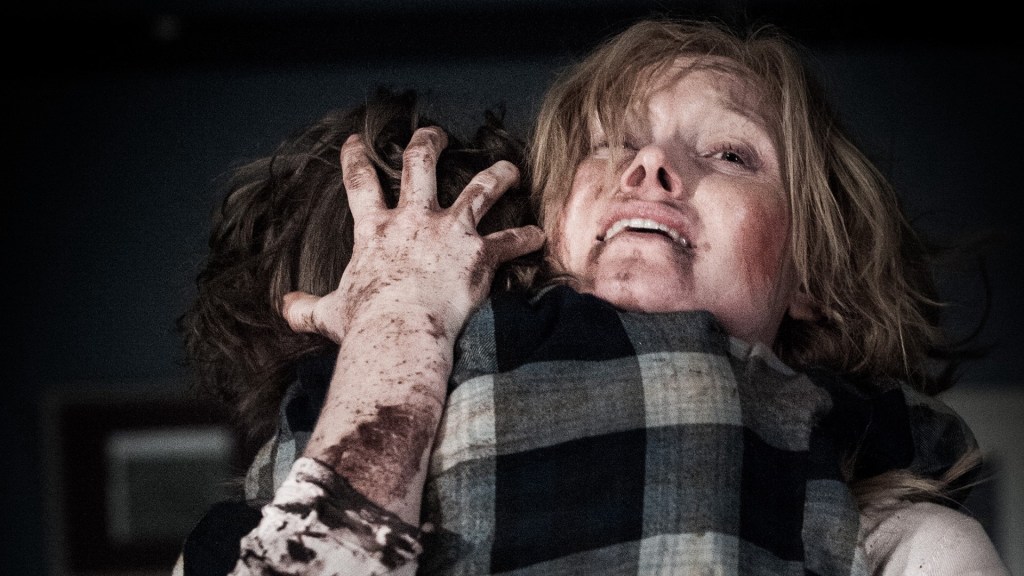
The Babadook is a film about the relationship between a mother and a child, and how it can lead to loads of repressed anger and hatred especially for mother on her child. Amelia is a widow that lost her husband in a car accident as she was being driven to the hospital to have her only child, Samuel. Not only is Amelia penalized with this for having her child, but also with the fact that Samuel is troubled and an annoying nuisance to everyone he comes in contact with.

medium.com: IFC Midnight

Samuel is kicked out of school and must be looked over constantly by Amelia, which strongly diminishes her career, sex life, and overall mental health (shown above). This is echoed by Skal’s writings on in ‘It’s Alive, I’m Scared’ when he states, “Children are the penalty to be paid for having sex, a scourge not much different than the ‘punishment’ of aids. From a liberal perspective, children are socioeconomic baggage that can drag you down.” This is a strong theme in the Babadook because Samuel’s torment of Amelia completely drags her down.

The monster that enters the movie known as The Babadook can be interpreted as a shadow archetype created by Amelia to terrorize Samuel and let out her most deep seeded hatred of him. Supporting evidence shows that Amelia wrote children’s book, has a deteriorating mental state, and is shown numerous times with black ink all over her hands, much like that used in the book she reads to Samuel that soon haunts them. The idea is that the Babadook is the terror she feels on the inside. Amelia’s repressed feelings are supported by Skal’s writings on taboo subjects and ideas saying, “The taboo subjects include fear of parenthood, guilt over abortion, and resentment of children coupled with the desire to remain a child one-self.”

theglobeandmail.com: IFC Midnight

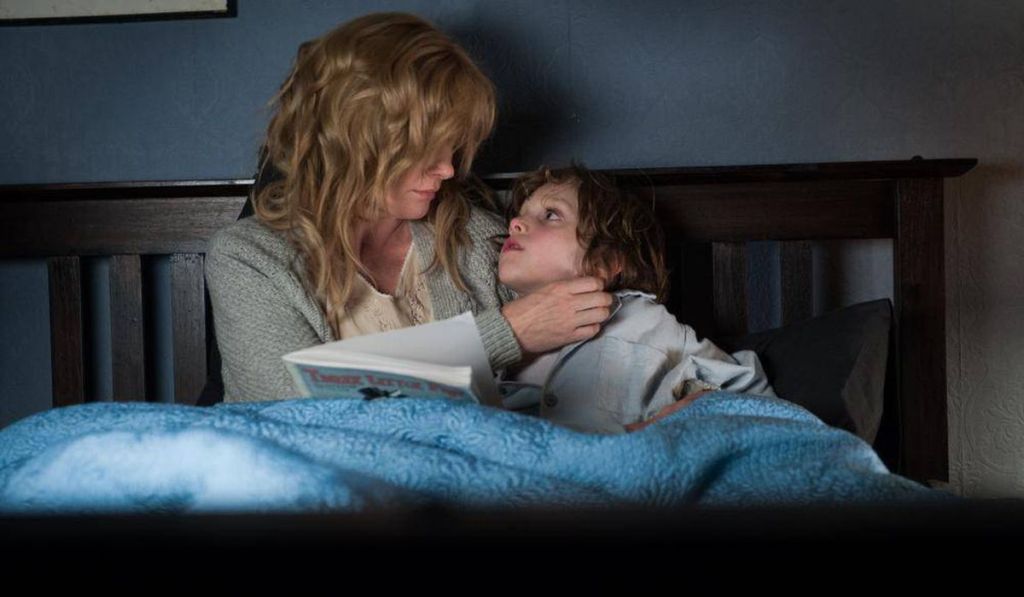
Another interesting aspect of the Babadook is the Oedipus complex in its reference to Samuel and his deep feelings towards his mother. Samuel being the only other person in the house has created an idea that he must protect his mother as long as she protects him. The young child adopts many of the roles that a father would have, such as sleeping in the bed with his mother (shown above) and staying up late watching TV with her. This is supported by Chris Dumas’ ‘Horror and Psychoanalysis’ when he writes, “Your parents are objects of fear and love, of hatred and desire- of all emotions, of all effects.” It is apparent that Samuel loves his mother deeply despite all the hell he brings to her through a slew of chaotic actions.

The Babadook is all about mother and child, with the torturous effects that the relationship can have on both parties. The themes of repression and angst towards toward one another can lead to extreme thoughts of violence and murder. The result is a shocking display of horror and a deterioration of mental health.

The Stepfather: Examining 1980’s horror and Tony Williams

The 1987 horror film, The Stepfather is a film that brought a refreshing concept of family chaos to the genre at the time. Before analyzing the film it is important to summarize and review Tony Williams writings in “Trying to Survive on the Darker Side”.

In Williams writings he begins by looking at the step back in overall film quality that the horror movies of the 80’s showed in comparison to the prior decade. In the 70’s, films such as The Exorcist, The Texas Chainsaw Massacre, and many others had a postmodern approach that often ostracized average American life through a theme of opposition. In the 80’s, gore spectacles and repetitive teen slaughter was present in most of the box office sensations such as Friday the 13th and Nightmare on Elm Street franchises, showing more of a hesitancy to the American life.

At the route of these movies is the constant theme of the patriarchal families and the trauma they have on each other to create horror movie moments. Williams argues that the villains of slasher films often represent the sadist and masochistic intents of the male subconscious. In doing this, they produce generations of victims that are ever effected by this cause.

In addition to the patriarchal themes, the role of the final girl also takes a more progressive and masculine approach in 80’s horror movies according to Carol Clover. Williams generally supports this claim, bringing to attention that the final girl plays less of submissive role and more of a castrating phallic wielding role. At the end of the film, the final girl is portrayed as a heroine instead of a survivor.

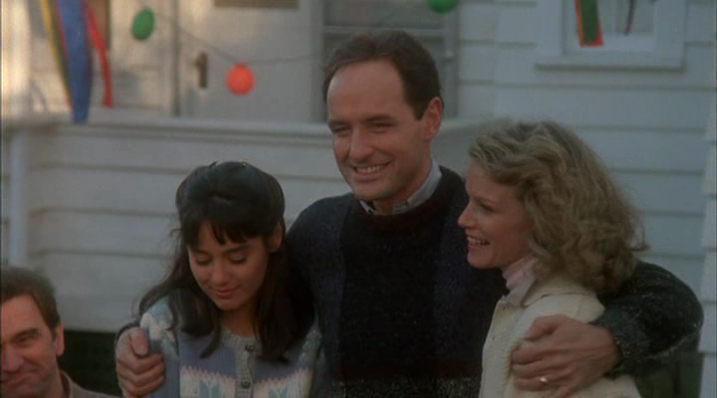
Looking at The Stepfather, the patriarchal sadism of 80’s horror is in full display. This especially comes to light with the authority that father figures exhibit on their wives and children. Jerry Blake, a serial family murderer, courts a widow Susan and looks to achieve a perfect American life with his new found family. However, the rebellious daughter Stephanie has the instincts to look into her new stepfather.

whysoblu.com: ITC Productions

The constant relationship of Jerry and Stephanie is representative of the average household. When Stephanie is caught kissing a boy, Jerry takes action and drives the boy away from Stephanie. In addition, Jerry looks to control and force Stephanie into an ideological relationship, when his underlying intentions are that of sadism, shown above. This theme is supported by Tony Williams when he writes, “an act of patriarchal physical violence is being perpetuated. Whether actual or fantastic, it still involves a master-slave power relationship, one stemming from within the patriarchal family.” The overall theme of The Stepfather is precisely this, a controlling and insane father figure cloaking his horrors with American life. Jerry does not care about the way he bonds with Stephanie, but about how it looks from an outside perspective because his life is entirely built on an image.

basementrejects.com: ITC Productions

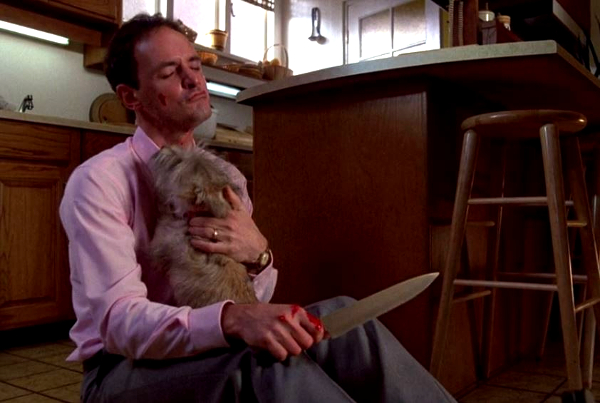
Stephanie is the an unique incarnation of the final girl, especially with regards to her age and behaviors. While she appears as an innocent young girl, Stephanie is a rebellious teen that is both cunning and mischievous. While the final girl is often a virgin, Stephanie is promiscuous to her crush and had numerous behavior incidents at school leading to her being expelled. This is in line with Williams writings on progressive final girls saying, “Freedom from ‘family values’ is a fundamental axiom for progressive moments within horror films.” Stephanie’s role in The Stepfather is to free her and her mother from the patriarchal family values. This is achieved when Stephanie stabs Jerry to death with his own knife, or phallic object(shown above), achieving full castration.

The overarching presence in The Stepfather, is Jerry’s male gaze over the women in his life. While he is perhaps not as overtly sexual as other patriarchal characters, it is the basis for his actions. This is once again displayed by his determination to force Stephanie into loving him. Williams writes, “As Tania Modleski remarks, the Oedipal father may still lurk withing the text (and the Final Girl) is a hidden point of reference in any mainstream narrative. It is a case of molding one into a gender position and child abuse towards Stephanie in the film.

Overall, The Stepfather builds on the rebellion against the classic American value system by overtly destroying it after portrayal in the most sadistic sense. This film shows that the castration of the nuisance that is the patriarch frees the victims from its horrors and that the masochistic intentions of the patriarch can be extinguished.

The Texas Chainsaw Massacre: Nihilism and Horror

Toby Hooper’s 1974 film, The Texas Chainsaw Massacre, is not just a scary horror movie, but a film that shows the inherent struggles of civilization and the failed narrative of the American Dream. Within this film, the Sawyer family depicts the failed American family and their attempt to threaten the younger generation and their more liberal lifestyles. This is achieved through a series of sadistic violence and inhumane acts primarily directed towards young women.

The Sawyer family has the genetic makeup that is most common with the picturesque American family; a patriarch with a grandfather at the top of the hierarchy, his son carrying out the family business, and grandchildren being groomed to one day take the mantle. The twist is that they are cannibals that are and have been capable of committing torturous acts on innocent people. As a young group of teenagers travel out in Texas, they are unknowingly lured towards the Sawyer house by one of the grandchildren posing as a hitchhiker.

nypost.com: Vortex Films

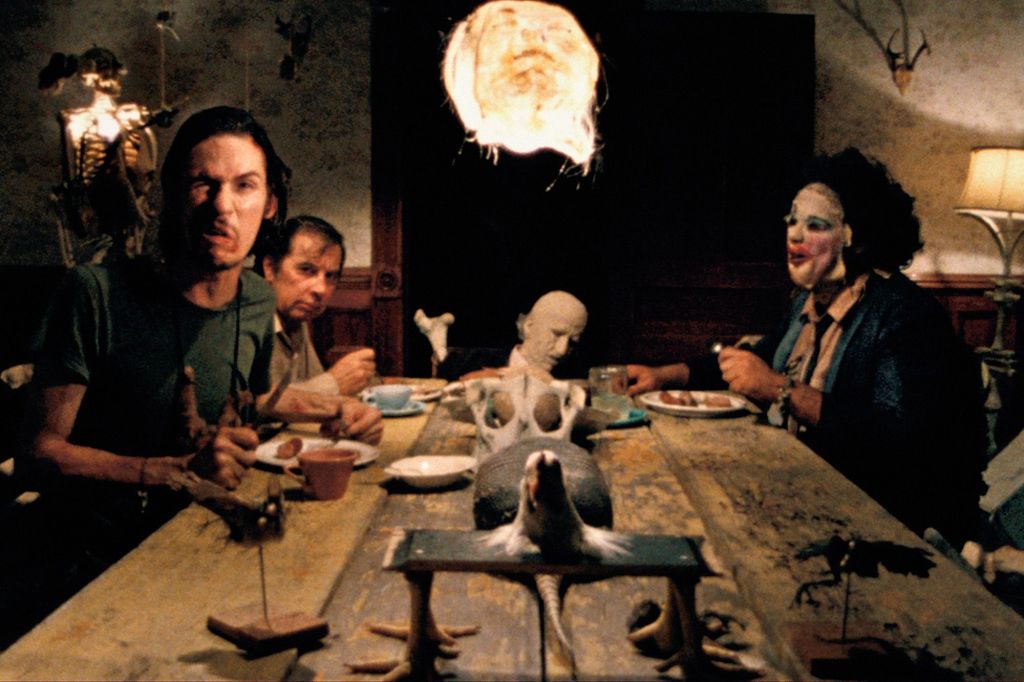
Perhaps one of the most iconic moments in the film is the dinner scene, shown above, which symbolizes a nihilistic take on the American family dinner. The female lead, Sally, is the unwilling hostage as opposed to the classy dinner date, with the sadistic family replacing the well adjusted suburban patriarch. This strongly suggests that the American family is guilty of being evil and innocent to it. This is supported by Tony Williams writings in ‘The Apocalyptic Dimension’ when he writes, ” Full of self-appointed missionary status, American society blinded itself to its negative side with ideological idealized innocence.” This is the case with the Sawyers, as they likely to not know that they are in the wrong, but brought up with this mentality.

Another struggle present in this film is the idea of keeping up with the times. The Sawyers are strongly immersed in a more primitive American society, while the teenagers, especially Sally, show that they are ahead of that and successful products of change. Williams writes “the slaughterhouse family emerge and take bloody vengeance on twentieth century Eloi beneficiaries of their economic exploitation.” The teenagers trespassing on the property of the Sawyers was enough to show that they were simply ignorant to the respect and loyalty households once had.

alchetron.com: Vortex Films

Taking a look outside of the clash between the teenagers and the Sawyers show that they are quite similar in makeup. The primary similarity is the role that both Hitchhiker and Sally take in their families. Williams explains it when he writes, “Family circumstances necessitate the presence of her (Sally) obese brother Franklin. The others regard him as a nuisance. Sally has to look after him as Hitchhiker has to care for Leatherface,” shown above. This similarity perpetuates the apocalyptic take on society that the film depicts.

The Texas Chainsaw Massacre is a nihilistic approach to film-making that pioneered a new avenue for filmmakers to show the problems with our society. The clash of an old school slaughterhouse and a group of hip teens is the perfect canvas for such a tale. With this in mind, it is truly shown the cultural impact that the horror genre can have on the world.

Carrie: The Monstrous Feminine

The 1976 horror film, Carrie, represents the monstrous feminine and the use of voyeurism to truly show the true monster that Carrie is, and not the hero she is often made up to be. The opening shot of the film provides the viewers with a seductive journey through a teenage women’s locker room, only to be abruptly ended by Carrie’s first period and a group bullying effort on her by the other girls. This use of voyeurism draws the male viewer into the film only to be shocked by the end result. This is supported by Shelley Stamp’s writings on “Horror, Femininity, and Carrie,” when she writes, ” Carrie’s puberty is depicted as a violent departure from the self-sufficient auto-eroticism of prepubescence she experiences in the shower.”

lifevsfilm.com: MGM

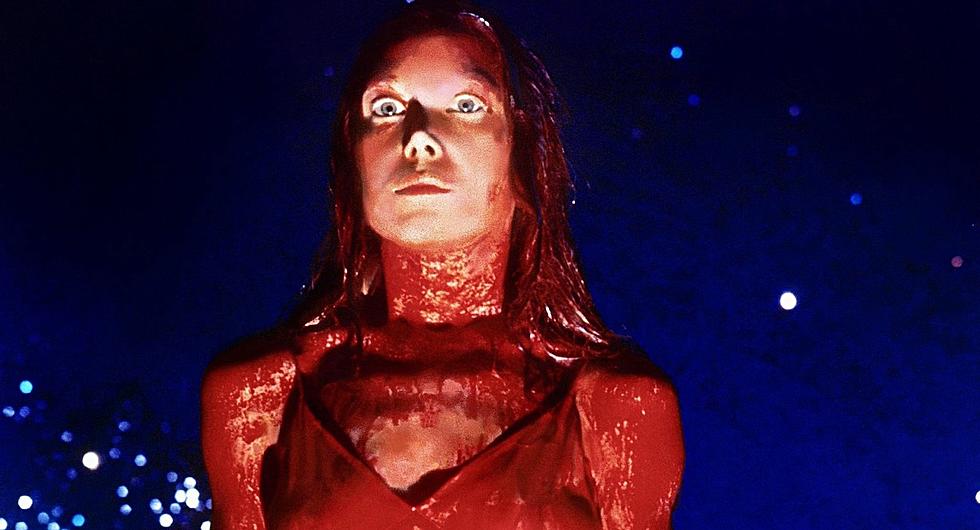
The monstrosity of femininity is soon cranked up a notch when Carrie discovers her telekinetic powers as a result of the first period. Carrie reaching the early stage of womanhood is greeted with an inhuman and supernatural ability, which often is seen in her times of rage and frustration, shown above. Stamp once again supports this thought in her writings, “Menstruation and female sexuality here are inseparable from the ‘curse’ of supernatural power, more properly the domain of horror films.

kingfm.com: MGM

In addition to the telekinetic abilities showing the monstrous feminine, Carrie is looked after by two maternal figures with conflicting ideologies. Carrie’s mother, Miss White, is a strict, controlling, and religious mother that does not allow Carrie any privileges that a teenage girl has. The other is the gym teacher, Miss Collins, who is a robust, powerful, and seductive woman that begins to look after Carrie when she is targeted by the other girls. Miss White is not letting Carrie do anything other than pray and study, while Miss Collins is encouraging Carrie to masquerade herself with makeup, products, and apparel. Shelley Stamp provides a concise and accurate analysis of these woman when she writes, “Both women are obsessed with physical punishment and the body.” There is no in between for Carrie, which inevitably leads to her rebellion against Miss White, and ignorance to Miss Collins, resulting in the horrific prom events, shown above.

Carrie provides both absolute ends of the feminine spectrum, displaying both as monstrous. The entire film revolves around women and the horrific and cataclysmic effects that they have on the films plot. As a result of Carrie’s havoc, an ambiguous ending leads to the demise or insanity of the female players in Carrie.

The Exorcist: Horror and the Monstrous-Feminine

The 1973 horror classic, The Exorcist, is a film that portrays the conception of the monstrous feminine and what is horrifying and abject in relation. The film uses the possession of a twelve year old girl, Regan, who is at the age of puberty, to fulfill this concept.

As Barbara Creed writes in “Horror and Abjection,” “the abject can be experienced in various ways, one of which relates to biological bodily functions” This is shown in The Exorcist primarily with the first glance at Regan showing signs of possession occurs at a house party, which she interrupts by saying a crude line and urinating on the floor. As Regan’s possession continues, she is constantly vomiting an spewing out bodily fluids when provoked by Father Karras and Lankester Merrin.

newstatesman.com: Warner Brothers

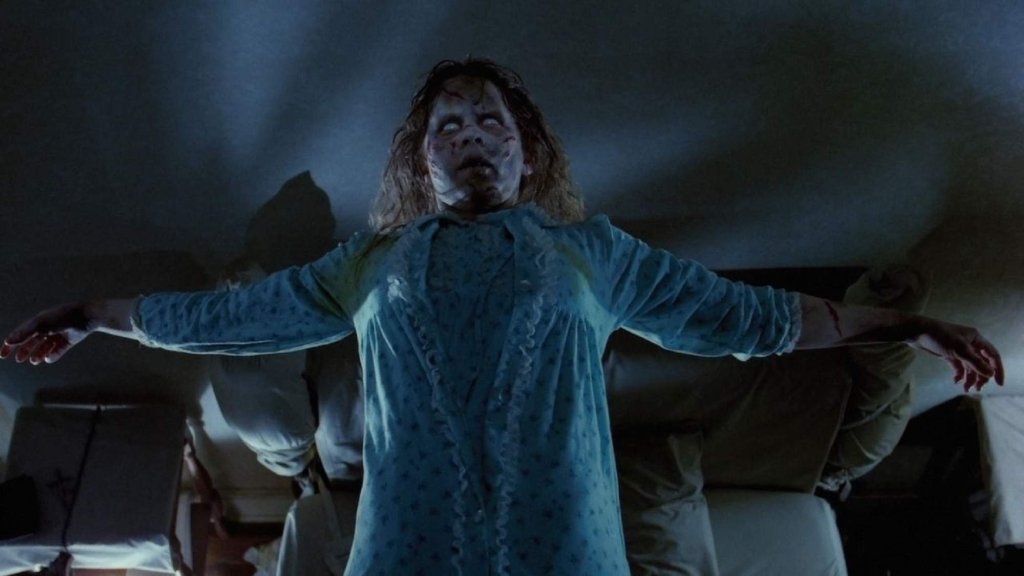
The abject also is shown with the character of Regan and the border between human and inhuman. Barbara Creed writes “In some horror films, the monstrous is produced by at the border between human and inhuman, man and beast.” Regan’s body is used as a host for the ancient demon Pazuzu, and resembles that of a corpse eventually, shown above. Regan is not completely transformed into a monster, but a rotting and grotesque version of her normal self. Along with this, she is capable of many contortions such as spider-walking, head-spinning, and levitation. This is all the more monstrous because she is still recognized as Reagan. This border is what helps her mother, Chris, remain interested in saving her daughter, as well as the priests willingness to perform an exorcism.

reelclub.wordpress.com: Warner Brothers

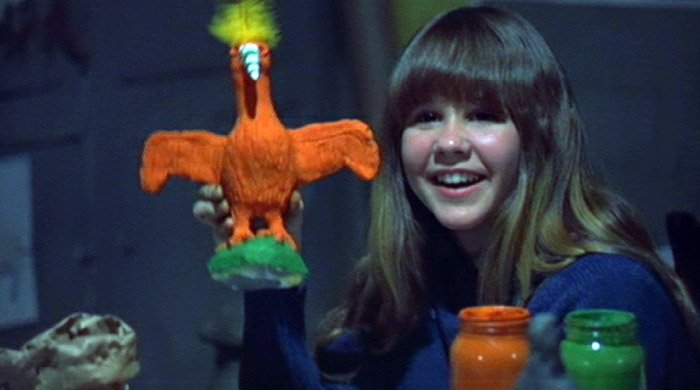
Another way The Exorcist illustrates the work of abjection is the construction of the mother as abject. This is also supported by Barbara Creed, “Once again we can see the abjection at work in the horror text where the child struggles to break away from the mother, representative of the archaic maternal figure, in a context in which the father is invariably absent.” Throughout the beginning of the film, Regan and her mother have a very close and nurturing relationship with no father figure present. Regan is shown playing like a prepubescent child in her mother’s eyes, shown above. Her possession can be viewed as a maturity and the breaking away from that stage their relationship, but in a crude and shocking manner. The extremity of this is shown by Regan using a crucifix as a phallic object. At the end of film, when Regan is exorcised, she is shown wearing a more mature outfit and has a visibly different relationship with her mother.

Throughout The Exorcist, the monstrous feminine is present and the abject horror of the female. The possession of Regan can be interpreted as puberty and maturity in the extreme, and her inevitable break from her mother.

Scream: Gender and Frustrated Teens

Wes Craven’s 1996 slasher, Scream, is a film that takes the well-known format of the slasher film and creatively plays off the genre to provide a unique and clever film. In addition to this, gender roles play a large part in the events of the film, especially with the final girl, Sydney Prescott.

Sydney Prescott’s character falls along the lines of most slasher movies, because she is a innocent virgin teen at the beginning of the film. Her friend Tatum contrasts this by being a flirtatious and promiscuous teen and is supported by Carol Clover’s writings on the final girl, “she is not fully feminine-not, in any case, feminine in the ways of her friends.” Sydney’s character development includes the murder of her mother just one year prior to the events of the film. After another high school student, Casey, is stalked and killed by Ghostface, the murderer’s attention soon focuses on Sydney.

hotflick.net: Dimension Films

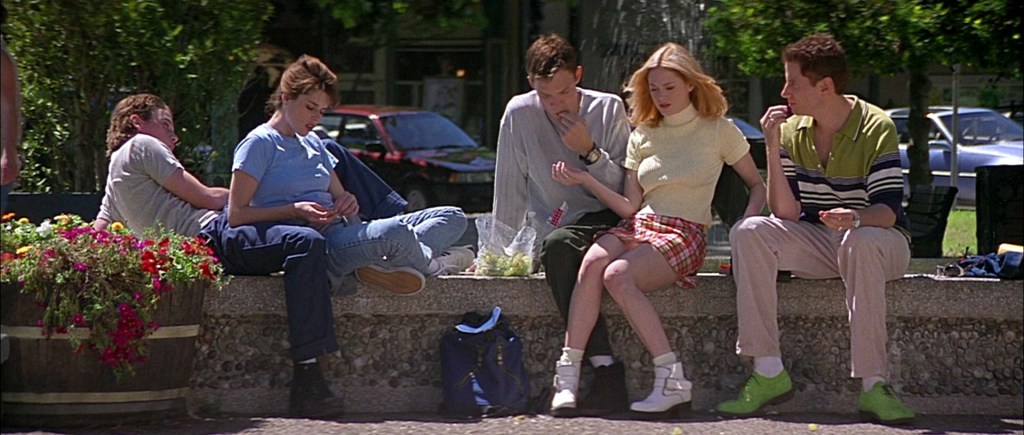
The image shown above of the main group of friends in scream provides a good basis for a mise-en-scene analysis. On the left side, we see protagonist Sydney and her boyfriend Billy. The couple’s relationship is a bit in limbo as Sydney is not ready to have sexual relations with Billy, shown by how Sydney is faced away from Billy, turning her back on what he wants from her. Next, the promiscuous couple of Stu and Tatum are sitting together, showing how comfortable they are with each other by eating together. Tatum is alos positioned between the legs of Stu in an almost sexual position. On the right is the nerdy video store worker, Randy, who becomes the most self-aware member of the group. Randy is shown away from the group and alone, much like how for the first half of the film he is the only one to see the position they are in.

The final showdown between Ghostface and Sydney comes somewhat after Sydney loses her virginity, which according to Randy would make her now vulnerable. After Sydney is first captured by Ghostface, it is revealed that the masked monster is a team killing effort between Stu and Billy. The inevitable chase between Sydney and the two is supported by Carol Clover’s writings, “she is the one who encounters the mutilated bodies of her friends and perceives the full extent of the preceding horror and her own peril.” Sydney, being the final girl, discovers the body of Tatum, and a multitude of horrors in her chase scene.

mynewplaidpants.com: Dimension Films

With Billy and Stu now known as the killer, shown above, the reason to target Sydney is apparent, more so with Billy. Sydney’s reluctance to have sex with Billy, and the twist that her mother had driven Billy’s parents provide a motive for the attack against her. The reason for punishment is supported by Clover when she writes, “the gender of the final girl is likewise compromised from the outset by her masculine interests, her inevitable sexual reluctance, her apartness from other girls, sometimes her name.” Clover’s thoughts align with the events in Scream.

Scream has a lot to interpret in its run time, but the most apparent theme in the film is the dynamic between high school teenagers. The force exhibited on young girls by men and the spotlight that is often cast on sexual activity fuels the the events of Scream, and the terror that follows.

Halloween: A Look at Sexual Identity in Haddonfield

John Carpenter’s 1978 low budget box office hit Halloween, is an early form of the slasher film format loved by many, with a simple story that can be analyzed beyond the brutal killings that took place in Haddonfield, Illinois. Halloween is a classic slasher, with the silent, slow-moving Michael Myers wreaking havoc among provocative teenagers that dare step in his path on the anniversary of his childhood murder, and the transformation of his primary target, Laurie Strode, into a male role.

thesun.co.uk: Compass International Pictures

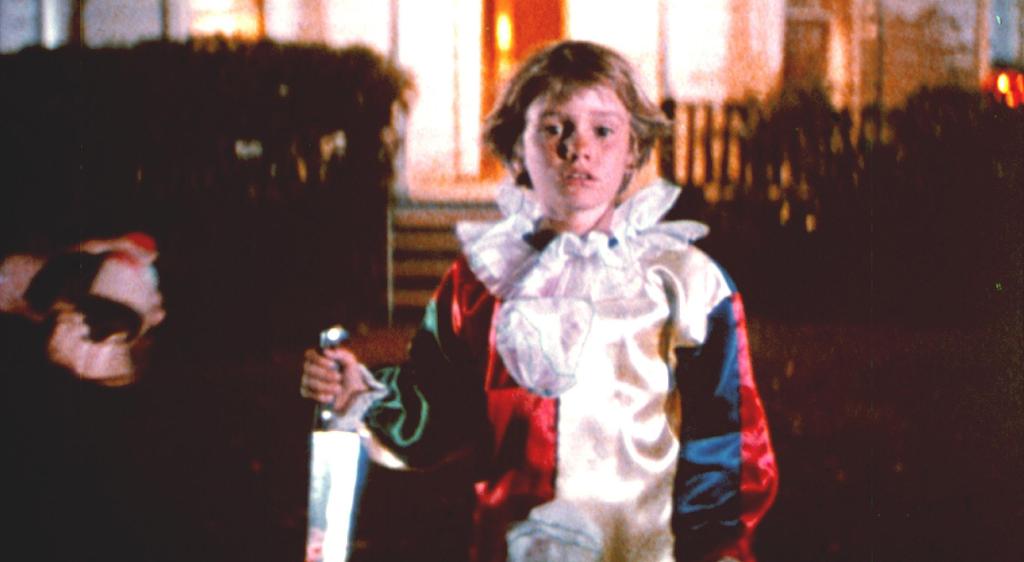
The childhood of Michael Myers is the beginning of what is to come in his later years. In a furious state of sexual frustration, Michael kills his sister which is supported by Carol Clover’s writings in “Her Body, Himself,” saying “Michael, at the age of six, is so enraged with his sister (evidently for having sexual relations with her boyfriend), that he stabs he stabs her to death with a kitchen knife,” as seen in the above image. This sexual confusion is common with the killer in slasher movies, as it keeps them at a state of immaturity and frustration. Michael’s behavior is very childlike, with his silent stalking and playfulness with his killings (the sheets and glasses).

The role of Laurie Strode is as important as Michael Myers, because she is the antithesis of Michael, a caring, smart, and driven woman. When Michael returns to Haddonfield, he begins to stalk Laurie, possibly because she is so much different then the girls around her and his sister Judith. Clover says, “The Final Girl of the slasher film is presented from the outset of the main character… Unlike her girlfriends, she is not sexually active.” This is extremely important to note because Laurie, like Michael, is sexually frustrated, which we see with the Ben Tramer setup. This is because the final girl is often more masculine, while the killer is often more feminine, leading to the fight put up by Laurie and the castration anxiety shown by Michael.

lwlies.com: Compass International Pictures

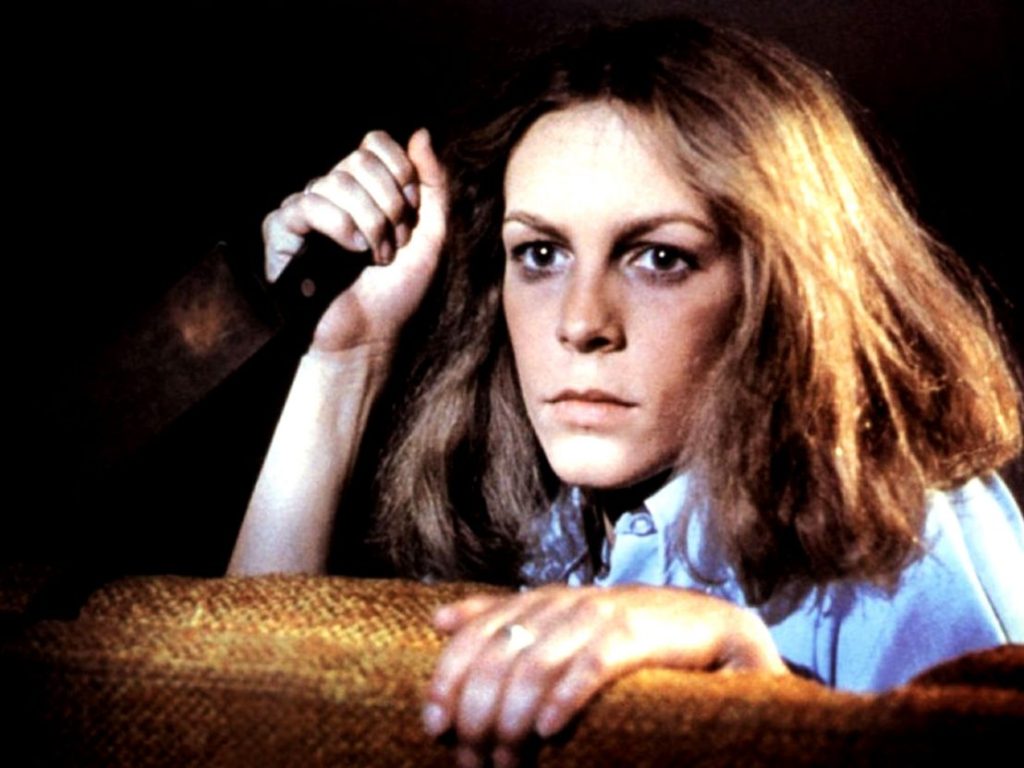
The fight that occurs between Laurie and Michael is indicative of the transformation of Laurie into a male and the castration of Michael. As Steven Marcus writes, “is itself both a defense against and a disavowal of the fantasy it is simultaneously expressing” – namely, that a “little boy is being beaten… by another man.” Before our eyes we see Laurie transform into a knife wielder with the phallic symbol once held by the killer, as seen above, and Michael attacked and rendered unconscious several times, only to retreat into hiding.

Halloween is a film that shows the deep psychological themes of a male killer and a final girl. While Laurie begins the film as a defenseless teenager, we see the transformation of her into a male type character with the power to stop an almost unstoppable killer. The phallic symbol of the knife is now possessed by Laurie, and Michael is emasculated and resolved back to the little frustrated child he represents.

Psycho: The Women and Male Dynamic

Alfred Hitchcock’s 1960 horror classic, Psycho, is much more than a terrifying thriller, but a psychological masterclass on the male gaze and effects on a female protagonist. The main female, Marion Crane, is an interesting take on the typical women shown in horror films, because she is a single working women that is on the lamb after stealing a large sum of money from a powerful businessman. While Marion’s situation is unique, she is still used as an enabler for murderer Norman Bates and his character arc. This is first shown through Bate’s peephole at his motel, to which he watches Marion undress in private. This is a very early use of voyeurism, which not only caters to Bates, but the male audience watching the film. This interesting dynamic also employs scopophilia, which Hitchcock often employs, giving the audience the feel that they are seeing the woman alone undressing. This scene uses Marion as an object of pleasure for two separate viewpoints.

medium.com: Universal Pictures

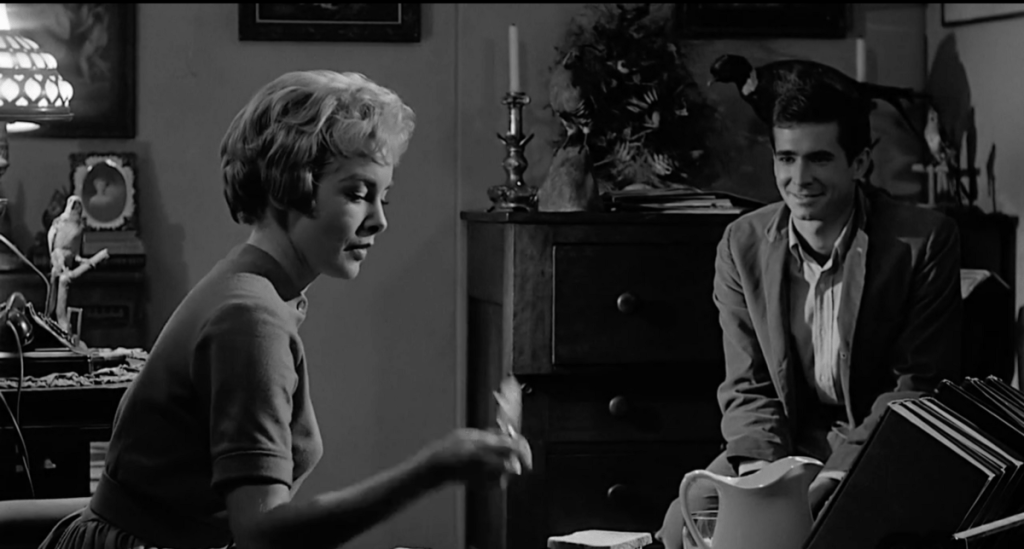
Upon Marion’s first visit to the Bates Motel, it is quite clear that Norman is infatuated with her, with Marion not feeling mutual. This is the presence of the male gaze in the film. Linda William’s in her writing “When the Woman Looks” writes, “Like the female spectator, the female protagonist often fails to look, to return the gaze of the male who desires her.” The image shown above ties in this quote with the situation in Psycho, because Norman takes in Marion by giving her shelter, food, and interest with a strong amount of desire for her, but Marion is blind to that and does not realize the intensity of the situation she is in.

economist.com: Universal Pictures

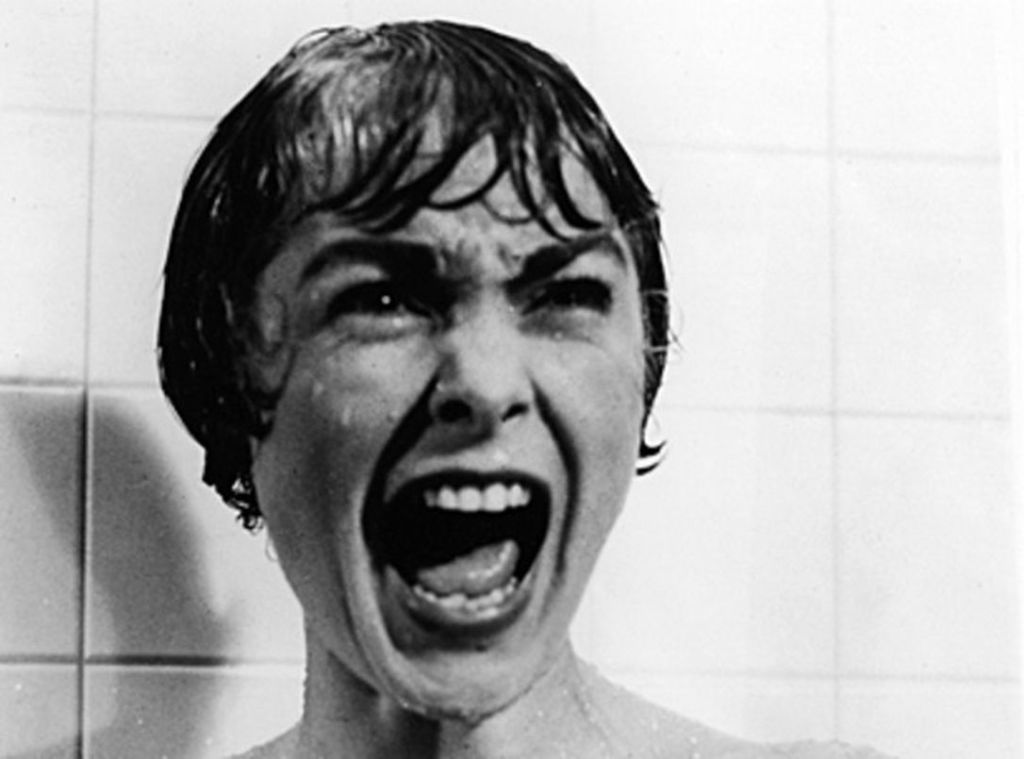
In the famous shower scene in Psycho, the view of Norman Bates is shown in addition to Marion’s view. This gives the audience the ability to adopt the viewpoint of a psychopathic murderer, in which there is more clarity into his killings. The image shown above is Norman’s view of Marion as he springs on her in the shower. As Marion looks at her killer, she is shown in a monstrous way. This is supported further in Linda Williams writing “When the Woman Looks” when she writes, ” this thus displaces, the female victim onto an audience that is now asked to view the body of the woman victim as the only visible monster in the film.” Marion is shown in this way to be recognized as a monster, much like Bates, because she is an equally damaged person.

Throughout Psycho, Norman Bates controls the fantasy for the audience to adopt. In Laura Mulvey’s ” Visual Pleasure and Narrative Cinema,” she writes “the man controls the film fantasy and also emerges as the representation of power.” Norman’s power and viewpoint is the driving force of the film, with Marion Crane serving as a passive woman, or exciting victim, along the course of the film.

Psycho serves as a film that utilizes women as fuel for the psychotic male antagonist. In this sense, the male gaze is used to give the audience a look at a seemingly helpless women-in-danger, all part of an exciting fantasy of a psychotic killer.

Design a site like this with WordPress.com
Get started