The 1992 psychological horror film, Candyman, is a film that uses an urban legend to project the social struggles of Blacks onto White culture and life. Before discussing the film in this context, it is important to summarize Robert R. Means Coleman’s writings in ‘Studying Blacks in Horror Films.’
Coleman opens up in his writings by calling attention to the relationship Blacks have with American cinema. This is where Coleman brings up the “black-gaze,” or the idea that blacks hope to see themselves as whole, full, and realized subjects in film and not a plot device for killing and violence. Coleman then speaks about how Blackness and horror work together in film to provide “important discursive inroads.” This in other words is the idea that violence will not overshadow the Blackness narratives offered in the films.
Coleman then discusses the differences between Blacks in horror films and Black horror films. The former, are films that feature Blackness and are not focused around it, but pander towards the mainstream audience. In these films, the link between Blackness and horror is not shown, but merely used as underdeveloped characters that are otherwise expendable. In Black horror films, the narrative is written for attention to racial identity. Typically, these films are written, directed, and acted primarily by Blacks and intended to subvert the treatment of the race when shown to White audiences. While these two types examples differ, they both go deeply into content such as race, racial identity, and racial relationships.
Coleman then goes into the idea of epistemological flow, or the ‘color line,’ which represents the distinct difference in perception of Black vs. White. Soon after, Coleman suggests that Blackness can reject and combat against evil in horror, centralizing more around goodness.
In Candyman, the first inference can very easily be that the film is a violent slasher, but a closer examination shows a more deep narrative focused around the perception of Blacks in society. The urban legend present in Candyman is quite literally representative of the Black Boogyman, which is the fuel for nightmares among many children.
When an intellectual graduate student, Helen Lyle, obsesses over the legend for her thesis, she becomes embedded in the story of the Candyman and is thoroughly haunted by him. The film looks to project the racial identity of impoverished Blacks on a well adjusted White woman through horror and violence. The intent of this by the filmmaker, Bernard Rose, is more along the lines of a Black Horror film, despite the mainstream production value and cinematography. This is supported by Coleman when he writes, “the Black horror film story is told from the vantage point of empowerment and with a goal of consciousness raising.”
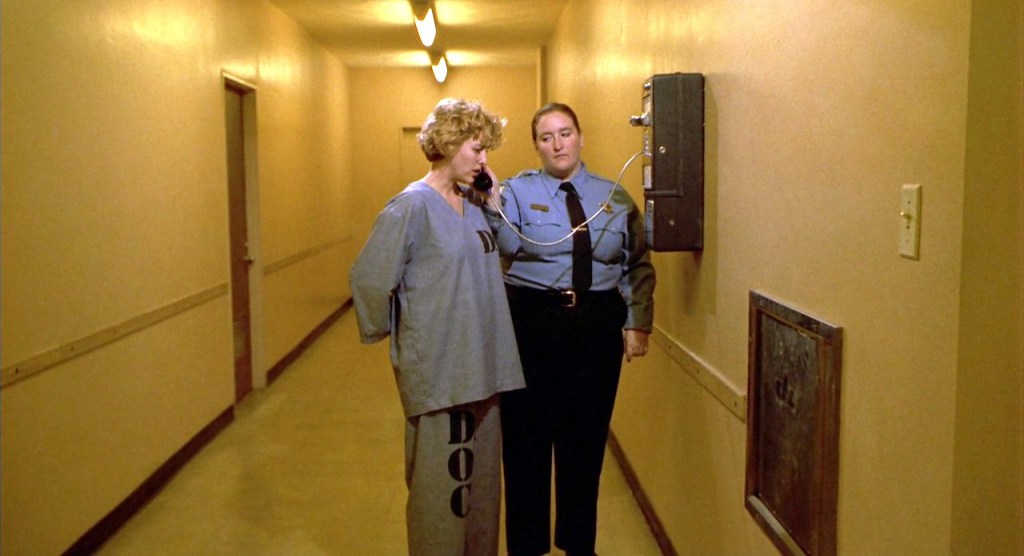
Helen is framed by the Candyman by being put in a vulnerable and guilty position around the murders of those in her life. This represents societies view of Blacks and crime, often casting guilt onto Blacks and labeling them as violent by nature. This offers a disturbing rendition, as Helen is a pretty, intelligent, and rational White woman, and shows audiences the representation of the ‘color line’. Regarding the color line, Coleman writes, “It is a problem that is still exacerbated by a ‘sense of always looking at one’s self through the eyes of others, of measuring one’s soul by the tape of a world that looks on in amused contempt and pity.” This is shown in the film, when society reacts to the crimes around Helen and do not listen to her pleas of innocence. Instead, she is institutionalized and cast out of society, shown above, and portrayed often how society views Blacks in prison.
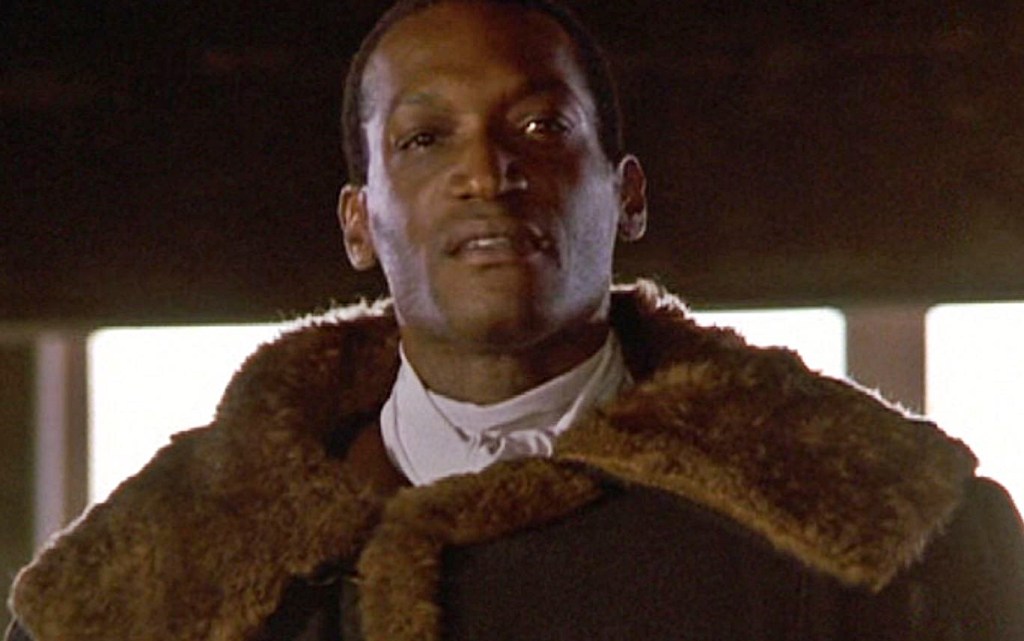
The urban legend of the Candyman is interesting in that the monster we assume Candyman to be, is ultimately the product of society. Candyman is a romantic and eloquent villain, who was the son of a slave, and an artist, that has a very civilized presence focused around revenge on society, shown above. After being tortured and killed for his impregnation of a plantation owners daughter, the legend began. Candyman is feared because he was the product of a broken society that could not accept the idea of a biracial relationship. This idea an topic suggest that Candyman is a Black horror film. While it may not completely fall under that description, there are certain elements that suggest it is. To support this idea, Coleman writes “Black film is about Black experiences and Black cultural traditions – a Black cultural milieu and history swirling around and impacting Blacks’ lives in America.”
Candyman is a Black experience because it casts a sense of guilt on the viewer in the treatment of Blacks. Horror is a such an effective device in doing this because violence, torture, and nihilism are ultimately very empowering when viewed. Combining these elements with societal behavior is very effective and hammers home the narrative behind Candyman.
 Derek Stoberl CMS 353