Toby Hooper’s 1974 film, The Texas Chainsaw Massacre, is not just a scary horror movie, but a film that shows the inherent struggles of civilization and the failed narrative of the American Dream. Within this film, the Sawyer family depicts the failed American family and their attempt to threaten the younger generation and their more liberal lifestyles. This is achieved through a series of sadistic violence and inhumane acts primarily directed towards young women.
The Sawyer family has the genetic makeup that is most common with the picturesque American family; a patriarch with a grandfather at the top of the hierarchy, his son carrying out the family business, and grandchildren being groomed to one day take the mantle. The twist is that they are cannibals that are and have been capable of committing torturous acts on innocent people. As a young group of teenagers travel out in Texas, they are unknowingly lured towards the Sawyer house by one of the grandchildren posing as a hitchhiker.
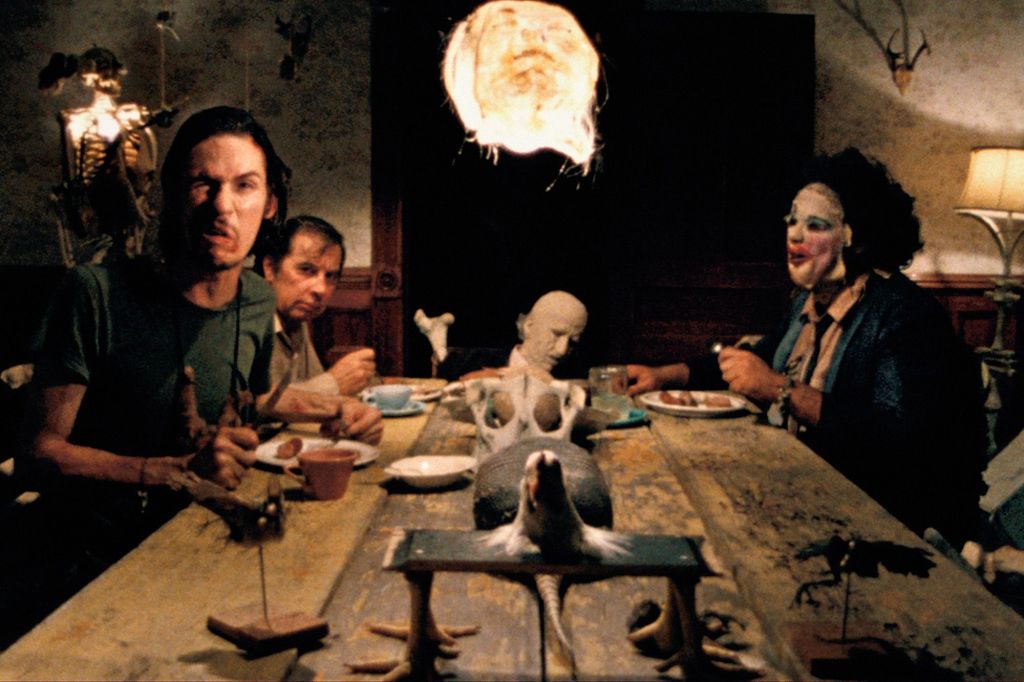
Perhaps one of the most iconic moments in the film is the dinner scene, shown above, which symbolizes a nihilistic take on the American family dinner. The female lead, Sally, is the unwilling hostage as opposed to the classy dinner date, with the sadistic family replacing the well adjusted suburban patriarch. This strongly suggests that the American family is guilty of being evil and innocent to it. This is supported by Tony Williams writings in ‘The Apocalyptic Dimension’ when he writes, ” Full of self-appointed missionary status, American society blinded itself to its negative side with ideological idealized innocence.” This is the case with the Sawyers, as they likely to not know that they are in the wrong, but brought up with this mentality.
Another struggle present in this film is the idea of keeping up with the times. The Sawyers are strongly immersed in a more primitive American society, while the teenagers, especially Sally, show that they are ahead of that and successful products of change. Williams writes “the slaughterhouse family emerge and take bloody vengeance on twentieth century Eloi beneficiaries of their economic exploitation.” The teenagers trespassing on the property of the Sawyers was enough to show that they were simply ignorant to the respect and loyalty households once had.

Taking a look outside of the clash between the teenagers and the Sawyers show that they are quite similar in makeup. The primary similarity is the role that both Hitchhiker and Sally take in their families. Williams explains it when he writes, “Family circumstances necessitate the presence of her (Sally) obese brother Franklin. The others regard him as a nuisance. Sally has to look after him as Hitchhiker has to care for Leatherface,” shown above. This similarity perpetuates the apocalyptic take on society that the film depicts.
The Texas Chainsaw Massacre is a nihilistic approach to film-making that pioneered a new avenue for filmmakers to show the problems with our society. The clash of an old school slaughterhouse and a group of hip teens is the perfect canvas for such a tale. With this in mind, it is truly shown the cultural impact that the horror genre can have on the world.
 Derek Stoberl CMS 353