John Carpenter’s 1978 low budget box office hit Halloween, is an early form of the slasher film format loved by many, with a simple story that can be analyzed beyond the brutal killings that took place in Haddonfield, Illinois. Halloween is a classic slasher, with the silent, slow-moving Michael Myers wreaking havoc among provocative teenagers that dare step in his path on the anniversary of his childhood murder, and the transformation of his primary target, Laurie Strode, into a male role.
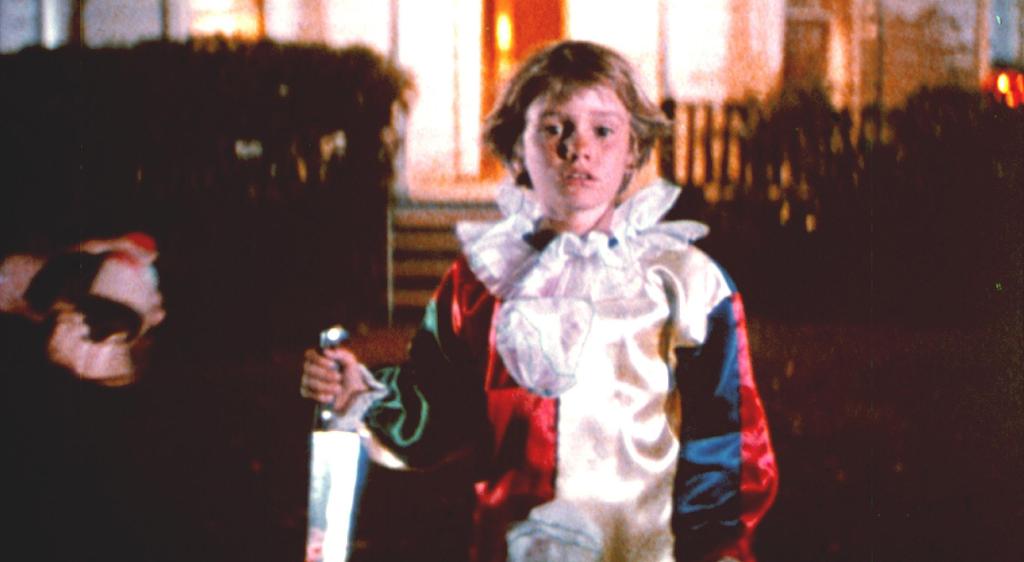
The childhood of Michael Myers is the beginning of what is to come in his later years. In a furious state of sexual frustration, Michael kills his sister which is supported by Carol Clover’s writings in “Her Body, Himself,” saying “Michael, at the age of six, is so enraged with his sister (evidently for having sexual relations with her boyfriend), that he stabs he stabs her to death with a kitchen knife,” as seen in the above image. This sexual confusion is common with the killer in slasher movies, as it keeps them at a state of immaturity and frustration. Michael’s behavior is very childlike, with his silent stalking and playfulness with his killings (the sheets and glasses).
The role of Laurie Strode is as important as Michael Myers, because she is the antithesis of Michael, a caring, smart, and driven woman. When Michael returns to Haddonfield, he begins to stalk Laurie, possibly because she is so much different then the girls around her and his sister Judith. Clover says, “The Final Girl of the slasher film is presented from the outset of the main character… Unlike her girlfriends, she is not sexually active.” This is extremely important to note because Laurie, like Michael, is sexually frustrated, which we see with the Ben Tramer setup. This is because the final girl is often more masculine, while the killer is often more feminine, leading to the fight put up by Laurie and the castration anxiety shown by Michael.
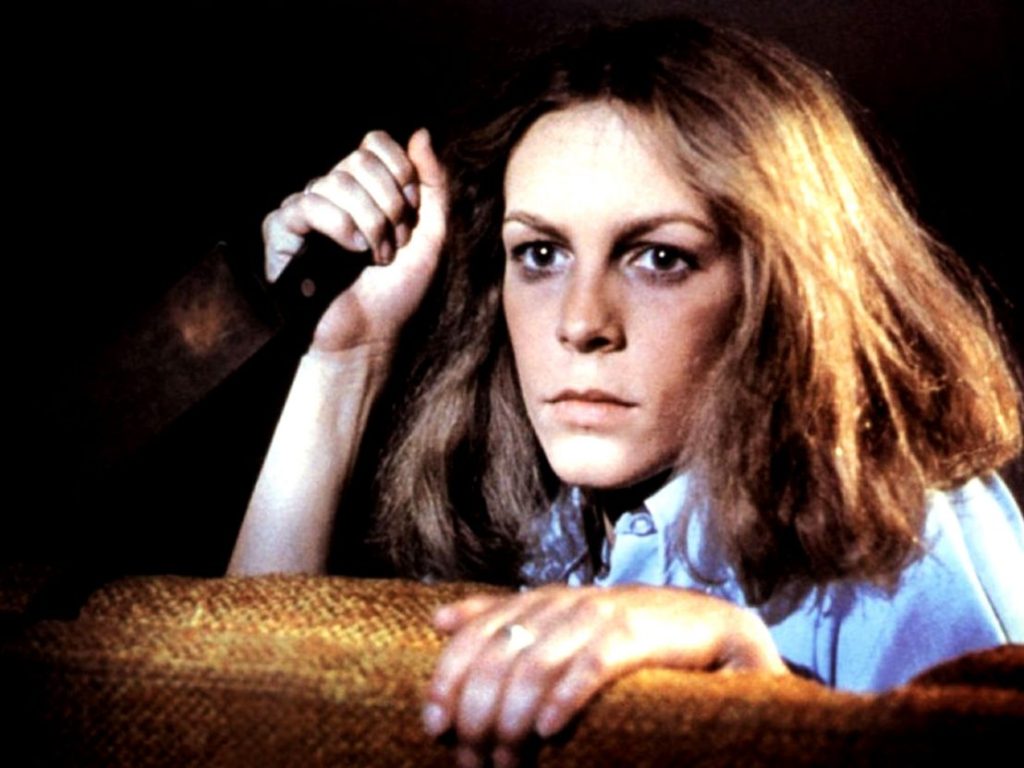
The fight that occurs between Laurie and Michael is indicative of the transformation of Laurie into a male and the castration of Michael. As Steven Marcus writes, “is itself both a defense against and a disavowal of the fantasy it is simultaneously expressing” – namely, that a “little boy is being beaten… by another man.” Before our eyes we see Laurie transform into a knife wielder with the phallic symbol once held by the killer, as seen above, and Michael attacked and rendered unconscious several times, only to retreat into hiding.
Halloween is a film that shows the deep psychological themes of a male killer and a final girl. While Laurie begins the film as a defenseless teenager, we see the transformation of her into a male type character with the power to stop an almost unstoppable killer. The phallic symbol of the knife is now possessed by Laurie, and Michael is emasculated and resolved back to the little frustrated child he represents.
 Derek Stoberl CMS 353